> For the complete documentation index, see [llms.txt](https://help.swarmia.com/llms.txt). Markdown versions of documentation pages are available by appending `.md` to page URLs; this page is available as [Markdown](https://help.swarmia.com/settings/integrations/issue-trackers/jira/jira-setup.md).
# Jira configuration
Every organization uses Jira in a slightly different way. That's why we let you configure your Jira settings in a way that supports your teams current practices.
## Sync the relevant projects
Choose how Swarmia syncs your Jira projects in [issue tracker settings](https://app.swarmia.com/settings/issue-trackers). Organization admins can update this at any time.
* **Sync all current and future projects** syncs every Jira project automatically.
* **Select projects to sync** syncs only the projects you choose.
* **Exclude projects from sync** syncs all current and future projects except the projects you choose. Use this option to keep sensitive projects out of Swarmia without manually updating the list as new projects are created.
A green check mark appears when a project has finished syncing.
## Map issue types and statuses
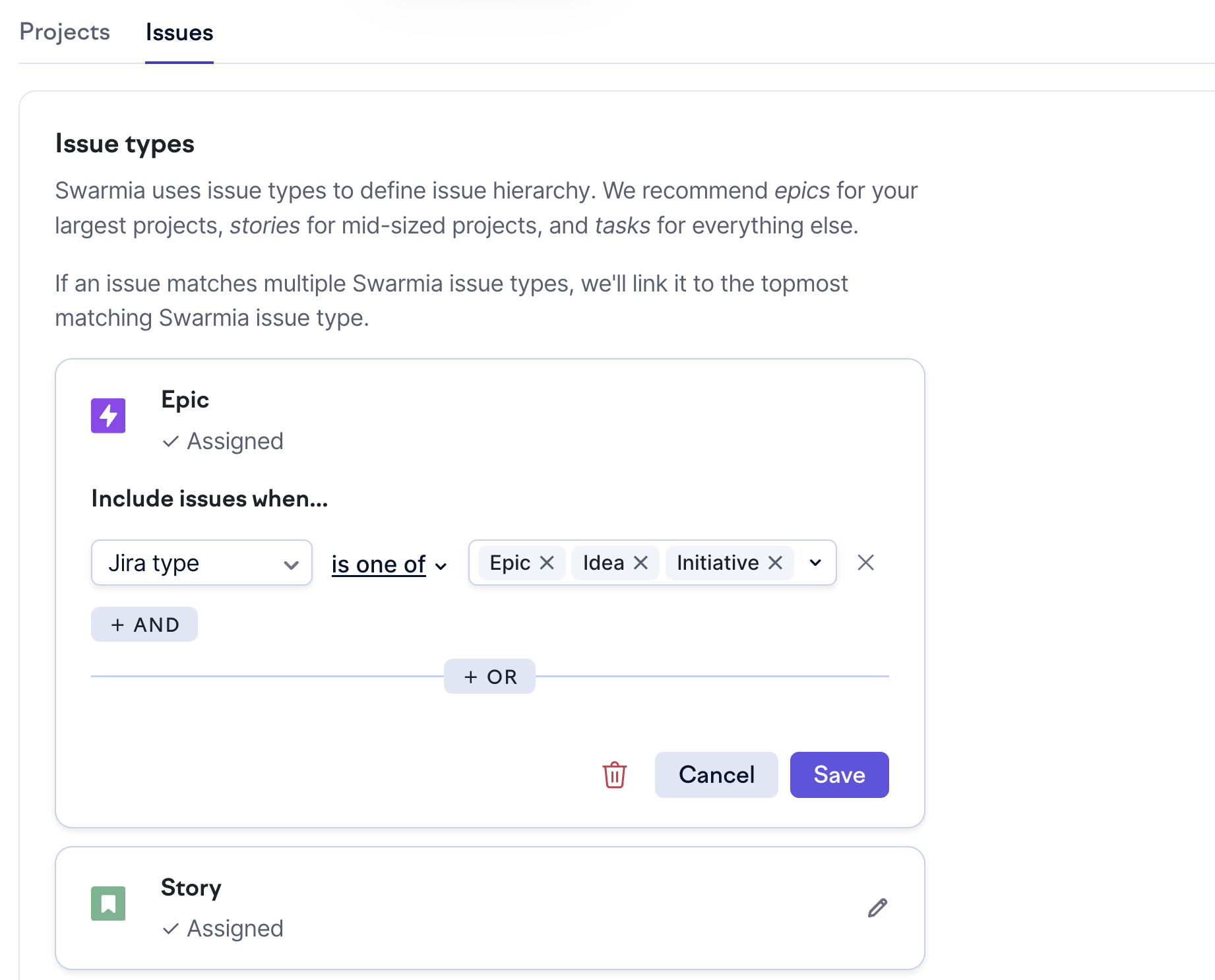
Within an organization, there are likely many issue types and issue statuses associated with them. Swarmia has tooling to help normalize that data. You can map your issue types to the four types available in Swarmia: epics, stories, tasks, and bugs. A common example is grouping bugs, incidents, and other similar issues into the **Bugs** bucket.
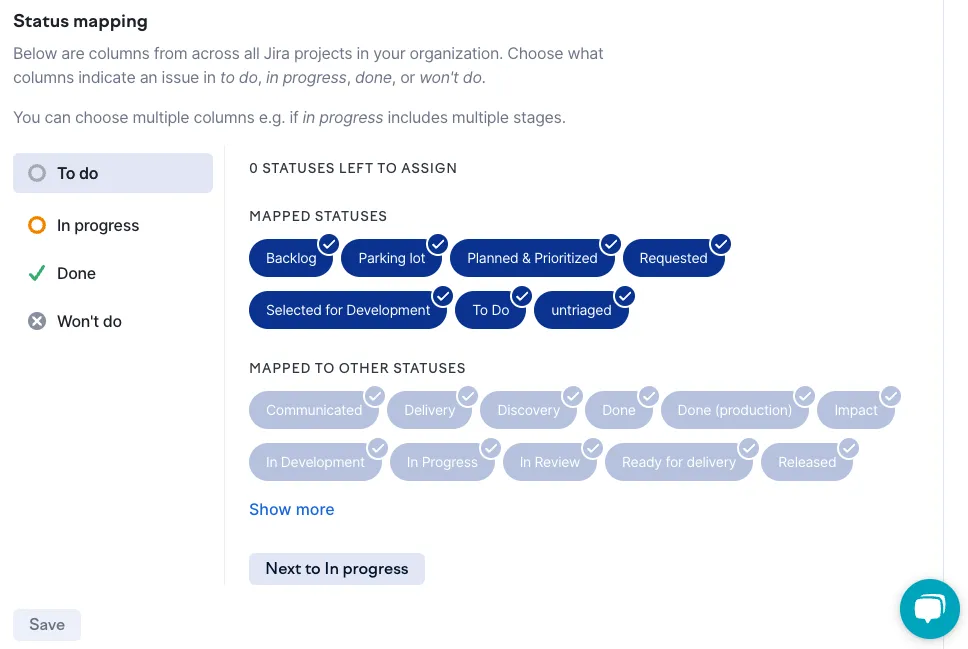
Like issue types, the use of issue statuses often varies between teams. When you connect Jira to Swarmia, we automatically map the issue statuses across your projects to the four Swarmia issue statuses: to do, in progress, done, and won't do. Organization admins can adjust the mappings at any time.
Status mapping
### Map issues to teams
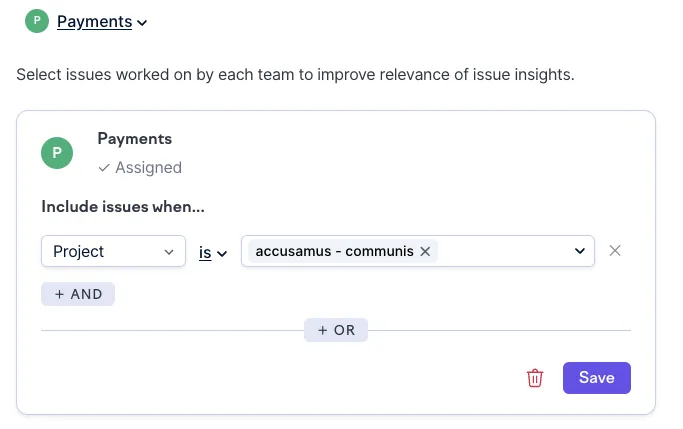
When you create a new team, Swarmia automatically suggests a project to be mapped to the team. If you have a setup where multiple teams use the same issue tracker project, you can assign the right issues to Swarmia teams based on, e.g., labels or custom fields. Assigning issue ownership for teams is an essential step, as only then will the Jira issues and related data be visible in Swramia.
[Swarmia issues team settings](https://app.swarmia.com/settings/team/issues)
A project-based issue ownership assignment
---
# Agent Instructions
This documentation is published with GitBook. GitBook is the documentation platform designed so that both humans and AI agents can read, navigate, and reason over technical content effectively. Learn more at gitbook.com.
## Querying This Documentation
If you need additional information that is not directly available in this page, you can query the documentation by asking a question.
Perform an HTTP GET request on the following URL with the `ask` and `goal` query parameters:
```
GET https://help.swarmia.com/settings/integrations/issue-trackers/jira/jira-setup.md?ask=&goal=
```
`ask` is the immediate question: it should be specific, self-contained, and written in natural language.
`goal` is what the user is ultimately trying to achieve, the reason they need the answer. Sharing it helps GitBook give you a better, more relevant answer. A goal is most helpful when it describes the outcome the user wants rather than restating the question. For example, with `ask=how do I create an API token`, a goal like `automate deployments from our CI pipeline` lets GitBook tailor the answer to that use case.
The response will contain a direct answer to the question and relevant excerpts and sources from the documentation.
Use this mechanism when the answer is not explicitly present in the current page, you need clarification or additional context, or you want to retrieve related documentation sections.